
In the years following the pandemic, one of the most noticeable shifts in New Jersey’s housing market has been a quiet but powerful one: buyers are trading glass towers for green lawns. More and more residents are leaving behind the convenience of condos and high-rises in favor of single-family homes that offer privacy, flexible living spaces, and – most importantly – room to breathe.
The change isn’t just about lifestyle. It’s a redefinition of value. Where buyers once focused on amenities and proximity to city centers, they now prioritize space, quality of life, and long-term comfort. For many, the idea of home has evolved beyond four walls – it now includes an outdoor sanctuary, a home office, and a neighborhood that feels like a community. In 2025, the “space factor” is one of the defining forces behind New Jersey’s residential market.
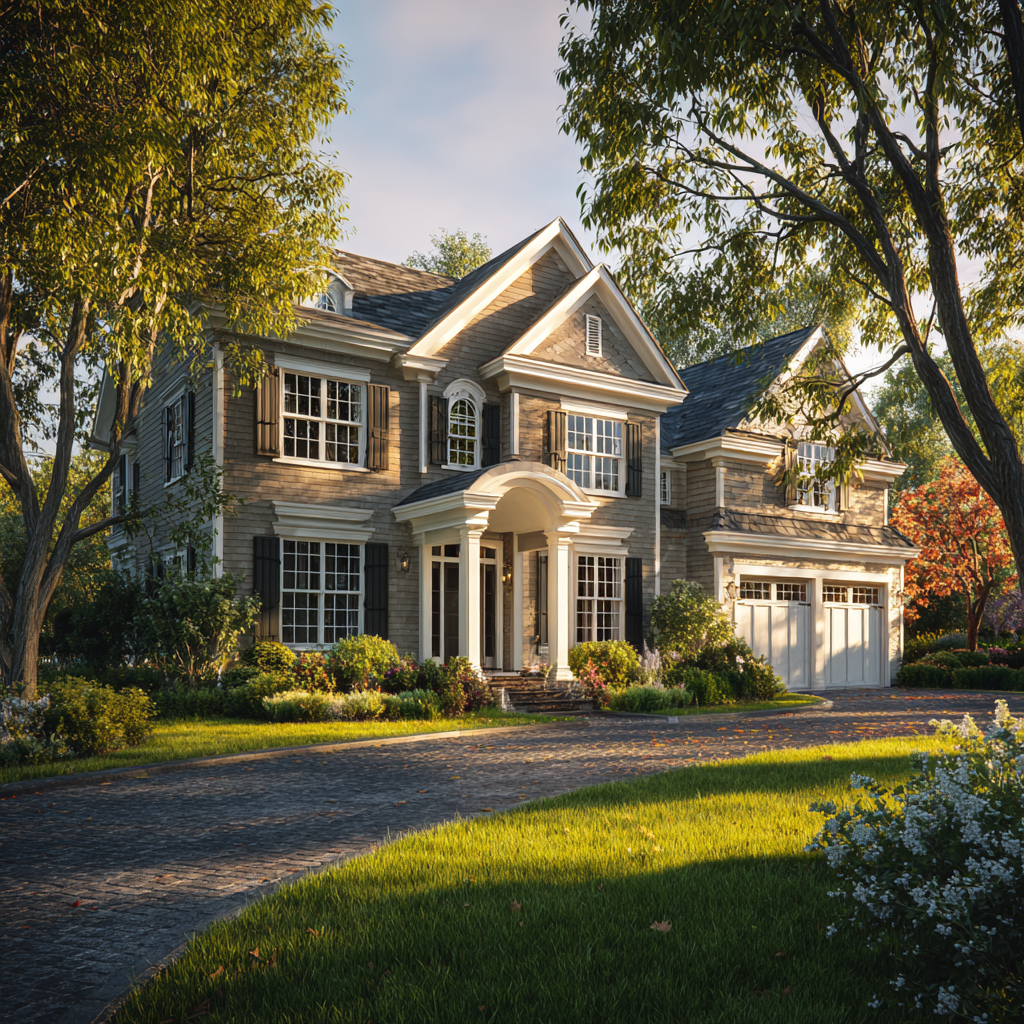
THE RISE OF THE BACKYARD LIFESTYLE
The pandemic accelerated a trend that was already in motion: people wanted more room. With remote work becoming a fixture and family life taking center stage, open space quickly became the ultimate luxury. For many New Jersey buyers, the appeal of a backyard, patio, or garden outweighs the convenience of shared rooftop decks and gym facilities.
The numbers back it up. Across the state, single-family homes continue to command a premium. The average single-family price in 2025 hovers around $565,000, compared to $420,000 for condos and townhouses. In certain suburban counties—like Morris, Monmouth, and Bergen—the gap is even larger. Buyers are paying more not just for the extra square footage inside, but for the land itself.
Outdoor space has become a cornerstone of homeownership. Families want room for children to play, pet owners need yards, and homeowners want the freedom to host, garden, or simply unwind without the noise of shared walls.
FROM CONDOS TO SINGLE-FAMILY HOMES
Before 2020, many professionals in the New York metropolitan area chose high-rises in Jersey City, Hoboken, or Edgewater for easy commutes and amenities. But by 2025, demand has shifted decisively toward single-family living.
Instead of paying for skyline views, buyers are investing in personal space and long-term stability.
New Jersey’s appeal lies in its versatility: from small suburban cottages to spacious properties with half-acre yards, the options suit a range of buyers. Many towns within commuting distance to New York City—such as Montclair, Summit, and Westfield—have seen steady demand as residents seek more space without giving up access to the city.
In Central and South Jersey, the appeal is slightly different: affordability and land. Buyers from New York and North Jersey are finding they can purchase larger homes for less money, often with enough outdoor room to expand or customize.
COMPARING SPACE AND VALUE ACROSS NEW JERSEY
To understand how “space” translates to value, it helps to look at how property size and price interact across the state. While condos often boast higher prices per square foot due to location, single-family homes consistently provide more total space and land ownership—an increasingly prized asset.
| County | Avg Lot Size (SF Homes) | Median Home Price (SF) | Median Condo Price | Price per Sq.Ft (SF) | Price per Sq.Ft (Condo) |
| Bergen | ~10,500 sq. ft. | $780,000 | $540,000 | $395 | $470 |
| Essex | ~9,000 sq. ft. | $860,000 | $410,000 | $420 | $460 |
| Morris | ~18,000 sq. ft. | $725,000 | $500,000 | $355 | $455 |
| Monmouth | ~15,000 sq. ft. | $775,000 | $560,000 | $370 | $465 |
| Hudson | ~3,500 sq. ft. | $590,000 | $595,000 | $385 | $600 |
| Camden | ~10,000 sq. ft. | $430,000 | $320,000 | $250 | $310 |
Approximate 2025 data; single-family (SF) homes versus condominiums.
This comparison highlights a fundamental truth about the market:
In areas like Hudson County, where space is scarce, condos dominate and command higher per-square-foot prices. In suburban counties such as Morris and Monmouth, single-family homes offer far greater value per dollar—and much more land.
In essence, buyers are paying for lifestyle, not just location.
REMOTE WORK AND FLEXIBLE LIVING
The widespread acceptance of hybrid and remote work has made space an economic factor. In 2025, many professionals no longer need to live next door to their offices, and that freedom has fueled demand for homes that can double as workplaces.
Single-family houses naturally accommodate this shift. Finished basements become studios, spare bedrooms turn into offices, and garages transform into gyms or workshops. Unlike condos—where space is often limited and privacy is harder to find—houses provide flexibility for modern living.
In real estate terms, this shift has broadened the map. Towns once considered “too far” from Manhattan or Newark are now desirable because commute time is no longer the deciding factor. Buyers are choosing homes in places like Flemington, Sparta, or Ocean Township simply because they offer more space, peace, and adaptability.
PRIVACY, COMMUNITY, AND QUALITY OF LIFE
Beyond square footage, the move toward single-family living reflects a deeper desire for comfort and control. Buyers increasingly value privacy, neighborhood stability, and connection to nature.
Many New Jersey communities deliver on these fronts. Suburbs offer quiet streets, local parks, and reputable school districts – all contributing to long-term property value. Unlike urban condos, where turnover can be frequent, single-family neighborhoods often foster a sense of belonging and continuity.
There’s also a financial angle: owning land typically means more autonomy. Homeowners can modify, expand, or landscape their property to fit their needs, adding tangible value over time. A backyard garden, patio, or addition isn’t just a lifestyle upgrade – it’s an investment.

HOW LIMITED INVENTORY SHAPES BUYER BEHAVIOR
While demand for single-family homes has grown, supply has not kept pace. Across New Jersey, inventory levels remain historically low, especially for detached homes in desirable school districts.
This scarcity has pushed prices higher and made competition fierce, particularly in 2025’s spring and summer markets. Many listings attract multiple offers within days. Even buyers who once preferred the simplicity of condo living are now willing to stretch budgets to secure homes with outdoor space.
Condo markets, by contrast, are becoming more balanced. While urban centers like Jersey City and Hoboken still attract young professionals, growth has slowed as remote work continues to reduce the need for daily commuting.
The result is a market that increasingly rewards space, versatility, and long-term livability—traits that single-family homes naturally provide.
WHAT BUYERS VALUE MOST IN 2025
Through all these changes, a clear pattern emerges. Today’s New Jersey buyers are motivated by five core priorities:
- Outdoor Space – Gardens, decks, patios, and yards rank at the top of most wish lists.
- Flexible Layouts – Homes with extra rooms or finished basements allow for offices, gyms, and studios.
- Privacy – Detached homes provide quiet and distance from neighbors.
- Community Feel – Safe, walkable neighborhoods with good schools maintain steady demand.
- Affordability Over Convenience – Many are willing to commute farther for more space and value.
Together, these factors explain why single-family demand remains resilient even as mortgage rates fluctuate. Buyers see the trade-off – space versus convenience – as worth it.
THE CHANGING ROLE OF CONDOS
Condos aren’t disappearing, but their role in New Jersey’s housing landscape is evolving. For many first-time buyers, condos remain an affordable entry point. They offer lower maintenance and often come with amenities like gyms and pools. However, as families grow or remote work becomes a permanent reality, condos are less likely to meet long-term needs.
Developers are responding by designing townhomes and low-rise communities that blend convenience with space—an in-between option that appeals to younger buyers transitioning out of city apartments. Still, the demand for detached homes far outpaces new supply.
In areas like Monmouth, Morris, and Ocean Counties, the majority of new construction permits in 2025 are for single-family developments, underscoring where builders believe the future lies.
LONG-TERM IMPACTS ON NEW JERSEY’S MARKET
The ongoing preference for space is reshaping property values and development patterns across the state.
Towns that once marketed themselves primarily as commuter suburbs are now emphasizing lifestyle: parks, trails, schools, and community programs. Real estate listings increasingly highlight outdoor features and home-office potential.
Meanwhile, urban areas are working to adapt—redeveloping existing properties into mixed-use, low-rise housing that provides a suburban feel in an urban setting.
For homebuyers, this means more choices—but also more competition. As demand for space continues, property values in family-friendly suburbs are likely to remain strong. For sellers, emphasizing outdoor living and flexibility can make a home stand out in any market condition.
LIVING LARGER: WHAT IT MEANS FOR THE FUTURE
The story of New Jersey real estate in 2025 isn’t just about price growth or interest rates. It’s about priorities. Space has become the new currency of comfort, and buyers are willing to invest in it.
Single-family homes represent more than a roof and four walls—they represent freedom, stability, and a sense of balance that high-rise living rarely provides. As long as people continue to work, study, and relax from home, the demand for space will remain at the heart of New Jersey’s housing market.
For anyone considering a move, this is a pivotal moment. Whether upgrading from a condo or buying for the first time, now is the time to look beyond square footage and see how space shapes not just a property—but a way of life.
For personalized assistance and expert insights, contact Alexander Proskurov at (732) 580-2120 or email alexpr@newjerseyresidence.com.
This is not intended as a solicitation if your property is already listed with another brokerage.
