
In New Jersey, the sticker price of a house is only the beginning of the story. Single-family home values are shaped by a complex mix of factors – from geography and schools to taxes and market trends. In 2025, buyers and homeowners are keenly aware that a home’s true worth depends on much more than square footage and curb appeal. To make informed decisions, it helps to understand the real drivers of value across the Garden State. Factors such as location and neighborhood quality, access to transit and jobs, school district strength, walkability and amenities, tax rates, and supply-and-demand dynamics all play leading roles.
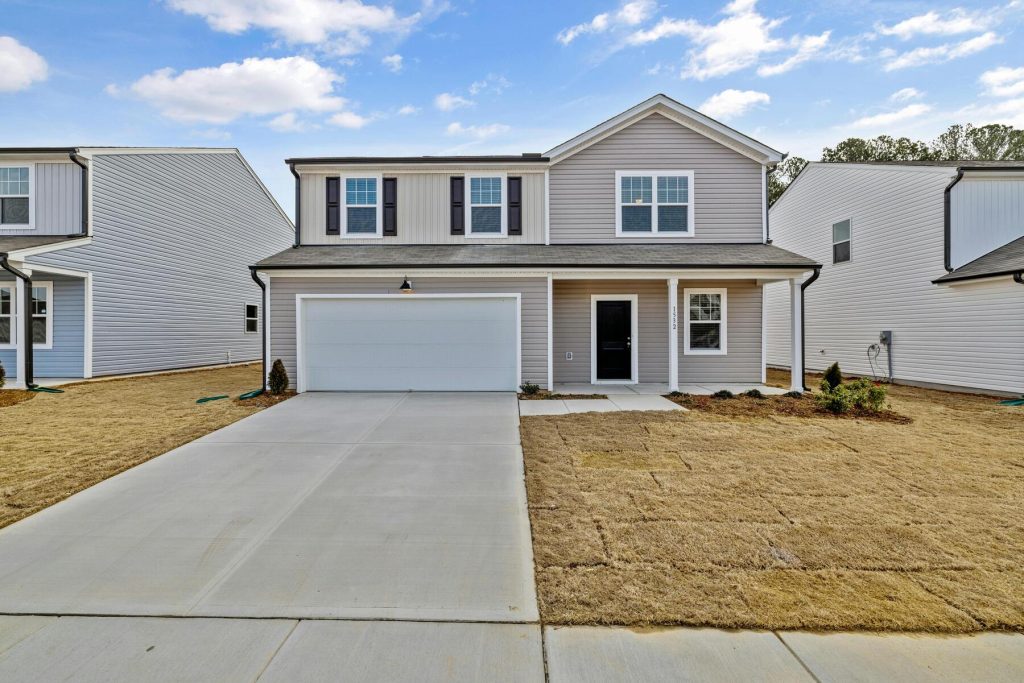
LOCATION AND NEIGHBORHOOD MATTERS
Where a home sits in New Jersey makes a huge difference. The state’s geography and local character shape desirability and price. North Jersey towns that lie in comfortable commuting distance to New York City – especially those on or near NJ Transit train lines – tend to command the highest values. For example, research notes that “desirable New Jersey neighborhoods… such as Morristown, Summit, and Chatham” see higher prices because of their great schools, parks, downtowns, and “convenient transport links like NJ Transit lines”. These suburban commuter hubs often market themselves on quick train or bus trips into Manhattan, and indeed buyer demand reflects that premium: Summit and Montclair each have average single-family prices around $1–1.3 million.
In contrast, rural and exurban areas – from western Sussex County to parts of South Jersey – typically have lower prices. For example, a suburban Camden County community like Cherry Hill has an average home value under $450K. Even within urban centers, pockets vary: an old industrial town or city neighborhood may cost less than an outlying suburb with more green space. Overall, location-related factors include regional economy (nearby jobs or industry), commute routes (proximity to major highways and transit), and neighborhood character (downtowns, parks, walkable main streets, waterfronts, or open space). Buyers often pay a premium just for the zip code and surroundings that fit their lifestyle – whether that means the bustle of a walkable downtown or the charm of a quiet suburban block.
Image: Homes near transit and amenities tend to be more valuable. Communities with frequent NJ Transit trains or buses – and nearby shops and parks – see higher demand and prices. In the photo, a NJ Transit bus arrives at a downtown stop, illustrating how transit access can boost a neighborhood’s appeal.
TRANSIT ACCESS AND COMMUTES
Proximity to reliable transit and major employment centers is a powerful price driver in New Jersey. NJ Transit’s vast rail and bus network connects countless towns to New York City, Newark, Jersey City, Philadelphia, and other hubs. Homes within a short walk of a train station or major bus line almost always command higher values than otherwise-similar homes off the beaten path. A 2023 study by the Regional Plan Association and economic consultants found that public transit service effectively adds about $10,100 in annual economic value per household in the communities it serves. In real terms, that translates to a significant property premium: towns on popular commuter lines (for example, Summit or Maplewood on the Midtown Direct line to NYC) can see home values well above the state average.
Commuting distance itself is part of this dynamic. In North Jersey, being within a 30–60 minute train ride of Manhattan is a huge selling point. Central Jersey towns often highlight 30–50 minute rail trips to Philadelphia (via Trenton or Hamilton) or one-hour drive times to Manhattan or Newark. For example, from Summit the train to New York’s Penn Station takes roughly 45 minutes, while from Princeton it’s about an hour to Midtown or 30 minutes to Philadelphia. These commute times – and alternatives like PATH service, ferries, and highway access – show up clearly in the market. Buyers willingly pay more to shave minutes off their daily travel.
Likewise, homes near park-and-ride lots, light rail stops or airports see higher demand. Even if a residence isn’t downtown, easy highway access (to I-78, I-287, the NJ Turnpike or Garden State Parkway) boosts its utility. In short, transportation connectivity is a top concern. The convenience of getting to work, school or city life makes towns with good transit hubs and roads consistently pricier. This is especially true as younger buyers prioritize shorter commutes: a recent Realtors® poll found 53% of people would choose a smaller, walkable home over a larger detached one if it meant living within easy walking distance of shops and restaurants. In the New Jersey context, such “walkable and transit-friendly” communities on train lines are hot tickets.
School District Quality
New Jersey has a reputation for strong public schools, and it shows up strongly in housing values. Homes zoned for highly rated school districts routinely sell for significantly more than comparable homes in lesser districts. Surveys and analyses underline this: one New Jersey real estate analysis noted that homes in the state’s top school districts often sell for 10–20% more than similar homes elsewhere (in part due to buyer demand for those schools). Nationally, the National Association of Realtors (NAR) has found that “home prices in high-performing suburban school districts were 49% higher than the national median” and far above prices in lower-ranked districts. In practice, that means if you compare two identical houses, the one in a district with A+-rated schools (say, Summit or Mendham Borough) could cost almost half again as much as one in a lower-ranked district.
This impact is partly about actual performance (test scores, college placement) and partly about perception and stability. Top school towns like Montclair, Ridgewood, Princeton, and Chatham see continuous demand from families. Realtors report that such houses often sell faster and hold value better in downturns, because strong schools create a steady pool of buyers. Even buyers without school-age kids care: good schools generally indicate a safe, community-oriented neighborhood with well-funded local government (since New Jersey’s education is largely funded by property taxes).
For example, Summit (Union County) is not just a convenient commuter town – its highly-rated Summit Public Schools system (Niche grade A+) is a major selling point. Cherry Hill (Camden County) is attractive partly because of its solid schools (Niche A–) relative to South Jersey norms. In contrast, two towns with identical houses but very different schools will typically see the higher-rated one value more. In short, school quality in New Jersey is a key factor buyers research and pay for, so it drives up prices in the best districts.
WALKABILITY AND LOCAL AMENITIES
Beyond transit and schools, the on-the-ground amenities and walkability of a neighborhood add yet another premium. In recent years, there’s been a resurgence of interest in compact, mixed-use communities in New Jersey. Towns with historic downtowns, shops and restaurants within strolling distance, parks, trails, and community events have become more desirable. This reflects a broader national trend: studies show people value walkable neighborhoods highly. For instance, a 2023 survey by the National Association of Realtors found over 30% of young buyers would pay significantly more to live in a walkable community.
Walkability tends to coincide with higher property values. Academic research confirms that “walkable cities experience economic benefits such as… increased local property values”. One meta-analysis of U.S. cities even found that homes within walking distance of amenities (parks, shops, schools) sold for roughly 23.5% more than similar homes in car-dependent areas. In New Jersey, the effect is visible in popular downtown suburbs like Westfield (shops on East Broad St.), Rutherford (Main Ave.), or Princeton (Palmer Square), where demand for single-family homes is intense partly for the convenient lifestyle.
Local amenities in New Jersey can include:
- Downtown business districts: Boutiques, restaurants, theaters, libraries. Towns that have preserved a Main Street or town center tend to attract buyers who want urban conveniences in a suburban setting. (Think Red Bank, Chatham, Morristown, or Montclair.)
- Parks and recreation: Access to good playgrounds, walking/biking trails (like the D&R Canal path), beaches/riverfronts (Jersey Shore towns or river towns), and open space adds value. For example, properties near Liberty State Park or the Sandy Hook beaches often fetch more.
- Cultural amenities: Proximity to museums, college campuses (Princeton), hospitals, and public venues (counties often have theaters or sports arenas) contributes to neighborhood appeal.
- Walk scores: Several NJ suburbs rank highly by Walk Score for having everything nearby on foot or bike. Such walkable areas are trending up, as Millennials and even retirees seek to minimize driving.
In short, if a neighborhood offers a rich “experience economy” – places to gather, shop, eat, play, and be active – its single-family homes will command a premium. Even small differences in convenience (like a short stroll to coffee shops or good bars) can edge up prices because buyers value those daily comforts. Essentially, walkability and amenities make a neighborhood livable and future-proof, lifting its housing market.
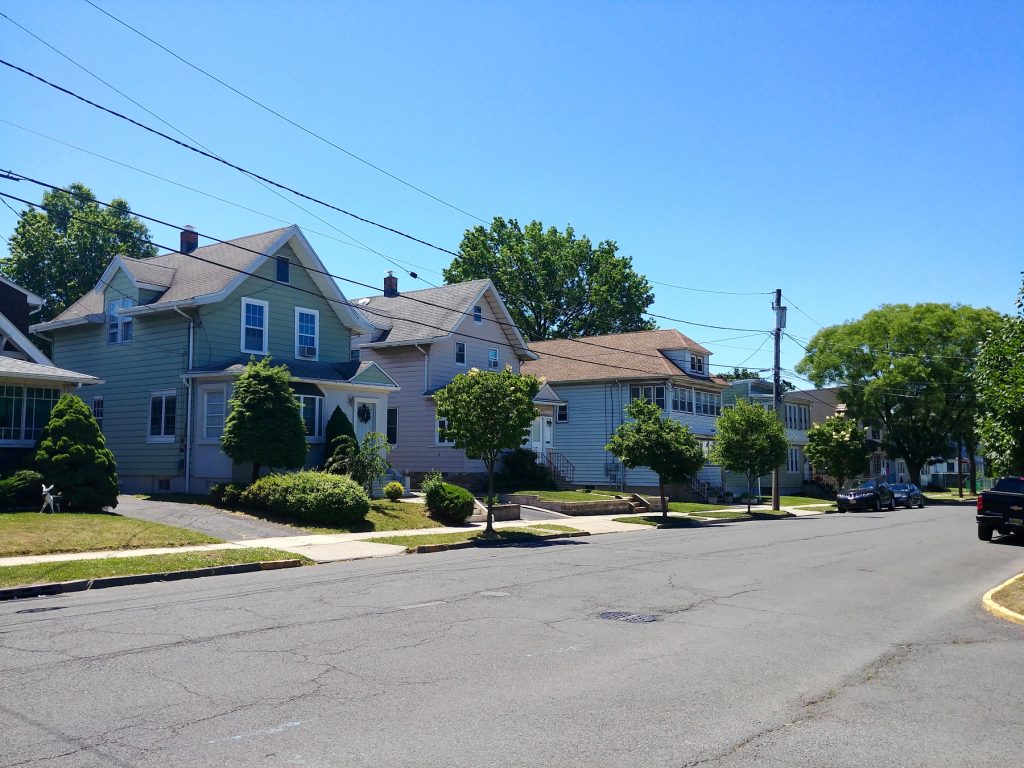
PROPERTY TAXES AND AFFORDABILITY
No discussion of New Jersey real estate is complete without taxes. New Jersey has the highest property taxes in the U.S.– by far. The statewide average effective tax rate is about 2.23% of a home’s value, which on a $400,000 house is nearly $9,000 per year. That is roughly double the national average rate. High taxes make homeownership more expensive in NJ than in most other states, and buyers (especially first-time or lower-income) must factor this into affordability. A town’s tax rate can even outweigh some locational perks for cost-sensitive buyers.
There is also a wide range across the state. Some exclusive towns carry 3%+ rates: for example, Millburn Township (home to many expensive estates) has one of the highest rates at 3.50%, meaning roughly $14,000/year on a $400K home. Summit is similarly high at about 3.15%. By contrast, beach towns and rural areas can have very low rates – e.g. Cape May Point’s rate is only 0.70% ($2,800 on a $400K home) – partly because of seasonal population swings and smaller municipal budgets. In general, northern and inner suburbs tend to have higher tax rates, while many southern and shore towns are lower.
High taxes weigh on values. Buyers arriving from elsewhere often do a double-take at NJ tax bills, and they often demand lower prices here than in comparable areas with lower taxes. In competitive markets, local agents often stress effective tax rates and property tax rebates (like the Homestead Benefit or Senior Freeze) as part of the affordability story. Empirically, markets with similar quality are priced lower in lower-tax towns. (One practical example: a reAlpha analysis noted that paying $14,000/year in Millburn taxes vs. $2,800 in Cape May Point is essentially an $11,000/year decision difference.)
New Jersey’s high taxes stem largely from funding generous schools, local services, and transit. Homeowners must understand that the tax bite is a major cost driver. Even if house prices seem high, a lower-tax rate can make a given price more affordable. Therefore, many buyers actively seek out lower-tax towns if everything else is equal (hence the popularity of “affordable NJ towns close to NYC” mentioned by real estate blogs). In summary, tax levels themselves don’t directly raise market value (they tend to suppress it), but they strongly influence net affordability and thus the final “value” a buyer will accept. Prospective homeowners always look beyond the price tag to the annual tax bill, making property taxes an essential piece of the value puzzle in New Jersey.
SUPPLY AND DEMAND DYNAMICS
Finally, the broad market’s supply and demand balance – influenced by economic trends and demographics – drives prices as a backdrop to all local factors. In recent years New Jersey has seen a very tight supply of homes for sale. Like much of the U.S., post-pandemic demand for single-family homes has remained strong (as people prioritize space and amenities), while new construction has lagged behind. By late 2024, national data showed our metropolitan area (NY-NJ-PA) still issued only one new single-family permit per 16 new jobs, indicating a shortage of housing relative to job growth. In practical terms, that means buyers often compete for the limited available homes, pushing prices up everywhere – even in less trendy neighborhoods.
Statewide, New Jersey’s population is also growing faster than in previous decades. In fact, NJ’s growth rate from 2023–2024 was the highest in the entire Northeast. Almost every region has seen rising population and household formation. When population grows and supply is constrained, the result is upward pressure on home values. This has kept New Jersey a seller’s market: average days-on-market remain low and many houses still see bidding wars in desirable areas.
It’s worth noting interest rates and the broader economy temper demand somewhat. With mortgage rates higher now than the ultra-low levels of 2020–21, buyer budgets are a bit tighter, which can cool price growth. But compared to pre-2020 norms, demand still outstrips supply. In parts of the state there’s simply not enough new housing, due to land use restrictions or local opposition to development. That chronic shortage gives leverage to sellers. Conversely, when supply briefly increased (e.g. during a small rebound in 2024) prices leveled off or even dipped slightly in some towns.
All told, local factors (location, schools, taxes, etc.) set the baseline value, but statewide demand trends provide the general momentum. New Jersey buyers in 2025 should be aware that a competitive market will pay up for the “perfect” home, making prime locations and features even more valuable than before. Even if your neighborhood’s local traits are strong, a surplus of homes or an economic downturn could flatten values. Conversely, a housing crunch in a region can boost even modest homes. In summary, supply/demand creates the overarching climate: it’s what determines how mucheach factor ultimately moves prices.
NEW JERSEY TOWNS COMPARED
To illustrate how these factors converge, consider the table below comparing several New Jersey municipalities. Each entry shows a representative single-family average home value, the local effective property tax rate, a broad school-district rating, and the typical commute time to a major employment center (New York City or Philadelphia) for that town. This highlights how price correlates with schools, taxes and proximity to hubs:
| Town (County) | Avg Home Value | Effective Tax Rate | School District Rating (Niche) | Commute (to City) |
| Summit (Union Co.) | $1,266,959 | ~3.15% | A+ | ~45 min to NYC (train) |
| Montclair (Essex Co.) | $1,097,694 | ~3.30% | A | ~35–40 min to NYC (train) |
| Princeton (Mercer Co.) | $955,872 | ~1.90% | A+ (state top) | ~1 hr to NYC (train), ~30 min to Phila (train) |
| Cherry Hill (Camden Co.) | $428,421 | ~2.93% | A– | ~15–20 min to Phila (PATCO) |
| Toms River (Ocean Co.) | $450,870 | ~2.10% | B– (Ocean Twp.) | ~45 min to Phila (train) |
- Summit is a quintessential NYC commuter suburb. Its average single-family home tops $1.2M, reflecting ultra-high-rated schools (Summit Public Schools is Niche A+) and a 45-minute train to Manhattan. Summit’s tax rate (~3.15%) is high for the state, meaning an expensive tax bill—but buyers pay for the location and schools.
- Montclair is another high-demand suburb near NYC. With an average price ≈$1.10M and Niche school grade A, it sits on direct Midtown Direct trains (about 35–40 min to NYC). Montclair’s taxes are also steep (around 3.3%), but the city’s vibrant downtown and transit access justify it for many.
- Princeton showcases dual-market appeal. A single-family home averages about $9550. Princeton’s taxes are relatively low (∼1.9%), reflecting Mercer County’s lower rates. Its public schools are among the state’s best (Niche A+), and it’s roughly an hour from NYC or half an hour from Philadelphia by train.
- Cherry Hill in South Jersey has a much lower home price (~$428K). Its schools (Cherry Hill Schools is Niche A–) are solid but less of a premium compared to North Jersey. Cherry Hill’s tax rate (~2.93%) is below many north-state towns. Importantly, it offers a quick PATCO ride (15–20 minutes) into Philadelphia – a major advantage for Pennsylvanians or Camden-based commuters.
- Toms River (Ocean Township) represents a shore-adjacent market. Average values are about $451K reflecting more modest local schools and a more distant location. Taxes (∼2.1%) are more moderate, and the commute to Philadelphia’s main jobs is around 45 minutes. Its appeal lies in affordability and beach access, rather than top-tier amenities or transit.
These examples show the trade-offs: towns with higher ratings and closer commutes fetch higher home values. Lower-tax or lower-cost areas exist, but often at the expense of commuter convenience or top-rated schools. In practice, New Jersey buyers balance these factors based on their priorities: an investment in a top school district like Summit or Princeton is costly, while a more affordable choice like Toms River or Cherry Hill means longer commutes or different school profiles.
In 2025 New Jersey, savvy home buyers and owners know to look “beyond the price tag.” Single-family home values are driven by a tapestry of factors: location (distance to cities, neighborhood desirability), transit access, school quality, amenities and walkability, tax burdens, and overall supply-demand. A house with an attractive price in the right town might actually be less affordable once taxes, commute time, and school needs are factored in. Conversely, spending more upfront for a home near good transit and schools can pay off in quality of life and long-term value.
Understanding these drivers – and the current data behind them – helps buyers choose wisely. For example, if two similar homes differ only in property tax rate, that tax difference can equal over $1,000 per month in cost. If a school district is ranked “A” vs. “B,” historical trends suggest prices could be tens of percent higher. If a train ride is 40 minutes instead of 60, many buyers might pay a premium for the shorter commute. The state’s top experts all agree: these “hidden” factors explain why New Jersey’s priciest towns remain pricy, and why some buyers prioritize moving farther out for more houses at lower cost.
By 2025, accessible information and research are plentiful. Citing fresh studies and local data helps cut through myths. New Jersey still offers tremendous diversity – both expensive suburban markets and more affordable corners – but the value comes down to how each factor stacks up. In short: location (and all that entails) drives value, but so do schools, transit, amenities, and taxes. Together with broader market pressure, they form the real estate equation that determines home values “beyond the price tag.”
For personalized assistance and expert insights, contact Alexander Proskurov at (732) 580-2120 or email alexpr@newjerseyresidence.com.
This is not intended as a solicitation if your property is already listed with another brokerage.
