
Both Hoboken and Jersey City in New Jersey offer vibrant urban living just across the Hudson River from Manhattan. In 2025, first-time homebuyers, families, and investors are weighing these two cities as prime alternatives to New York City. Each locale has its own character, costs, and opportunities. Let’s dive into a detailed comparison—covering housing prices, neighborhood vibes, commuting, schools, amenities, and more—to help you decide between Hoboken’s mile-square charm and Jersey City’s dynamic diversity.

COST OF LIVING AND REAL ESTATE
Hoboken and Jersey City are among the most expensive places to live in New Jersey, especially when it comes to housing. In fact, a 2024 survey ranked Hoboken as the priciest city in the state, with a median property purchase price around $969,000. Jersey City ranked third in that survey, reflecting high (but slightly more moderate) housing costs. By early 2025, the median sale price for a home in Hoboken was about $878,000 (up ~3% year-over-year). In Jersey City, the median sale price was roughly $664,000, which was about 9% lower than the year prior. This means Hoboken’s typical home prices are around 30% higher than Jersey City’s. Price per square foot underscores the difference: Hoboken homes sold for a median of about $835 per sq. ft., whereas Jersey City averaged around $514 per sq. ft. In short, Hoboken real estate commands a premium for its small size and cachet, while Jersey City offers relatively more space for the dollar.
Another cost factor is property taxes. New Jersey has famously high property taxes statewide, and these cities are no exception. The average annual property tax bill in Hoboken is about $9,317, while in Jersey City it’s roughly $10,624. Effective tax rates hover around 1.1% – 1.9% of home value. So, a more expensive Hoboken home doesn’t necessarily mean a much higher tax bill than a Jersey City home – in fact, Hoboken’s smaller municipal budget keeps its tax rate a bit lower. Still, buyers should budget many thousands per year for taxes in either city.
To put key numbers in perspective, here’s a quick comparison:
| Metric (2025) | Hoboken | Jersey City |
| Population (est.) | ~60,000 (1.25 sq. miles) | ~300,000 (15 sq. miles) |
| Median Home Sale Price | ~$878,000 (Feb 2025) | ~$664,000 (Feb 2025) |
| Price per Sq. Ft. (median) | ~$835 | ~$514 |
| 1-Year Price Trend | +3% (values rising slightly) | -9% (values cooling a bit) |
| Avg. Property Tax Bill | $9.3k/year | $10.6k/yea |
| Walk Score (Walkability) | 97 – “Walker’s Paradise” | 87 – “Very Walkable” |
| Homeownership Rate | ~34% (majority rent) | ~31% (varies by neighborhood) |
WHAT DO THESE NUMBERS MEAN FOR BUYERS?
Hoboken’s market is smaller and is still edging upward in 2025, indicating strong demand and limited supply. Bidding wars aren’t uncommon – the city’s housing market is considered very competitive, with homes spending a median of just 19 days on market. Jersey City’s market, by contrast, showed some cooling through 2024 (hence the year-over-year price dip), and homes take longer to sell on average (around 73 days). This suggests more inventory and choice in Jersey City, and possibly a bit more negotiating power for buyers there. However, certain parts of Jersey City (like the Downtown waterfront) remain highly sought-after and pricey, closer to Hoboken’s range.
It’s worth noting the type of housing available. Hoboken’s housing stock is dominated by condos and attached row houses – think brick brownstones subdivided into flats, mid-rise condo buildings, and a few modern high-rises. Single-family houses are rare and extremely expensive in Hoboken. Jersey City, being much larger, offers a wider variety: luxury high-rise condos on the waterfront, historic brownstones in downtown neighborhoods, multi-family homes and new townhouses in up-and-coming areas, and even some detached single-family homes in the outer neighborhoods. This means Jersey City can accommodate more preferences and budgets – from a one-bedroom condo to a multi-bedroom house – whereas Hoboken’s options are more uniformly high-end condo living or expensive townhomes.

HOW EACH CITY FEELS—AND WHY IT MATTERS
Despite their proximity, Hoboken and Jersey City offer distinct lifestyle experiences:
Hoboken blends small-town charm with city convenience. Just one square mile in size, it’s walkable, social, and community-oriented. You’ll find tree-lined streets, brownstones, pocket parks, and a vibrant mix of cafes, restaurants, and nightlife along Washington Street. While Hoboken has more bars per capita than any U.S. city, it also ranks as one of the best places to raise a family in Hudson County, thanks to its safety and amenities. The city is often divided informally into Uptown (quieter, newer condos) and Downtown (closer to PATH, more nightlife), but wherever you are, everything feels connected and close.
Jersey City, in contrast, is bigger, more varied, and more diverse. Its many neighborhoods offer different experiences—from luxury towers in Downtown to historic brownstones in Paulus Hook and community parks in Hamilton Park. Downtown JC mirrors Hoboken in walkability and vibe, but housing here spans everything from sleek high-rises to fixer-uppers.
Further out, areas like The Heights attract families and first-time buyers with more space and views of the Manhattan skyline. Journal Square is reemerging as a commuter hub and cultural district, while Bergen-Lafayette and Greenville offer lower-priced homes, often appealing to long-term real estate investors. On the city’s west side, near Lincoln Park, you’ll find a quieter, more suburban pace.
Jersey City is proudly one of the most diverse cities in America, and it shows—from its international cuisine and cultural festivals to its street art and community events. Not every neighborhood is polished, but many residents love its authenticity and energy. Whether you’re drawn to the artsy Heights, the family-friendly west side, or the buzz of the waterfront, JC offers a lifestyle as varied as its people—and plenty of jobs to support it.
GETTING AROUND: COMMUTE, TRANSIT & DAILY MOBILITY
PATH TRAINS
The PATH trains system is the fastest way to get from either city into Manhattan. Hoboken has one central PATH station at Hoboken Terminal, offering two lines—one to the World Trade Center and another to Midtown via 33rd Street. Jersey City has a big advantage in coverage, with multiple PATH trains stations across neighborhoods like Newport, Exchange Place, Grove Street, and Journal Square. For many commuters, this means shorter walks and quicker connections. However, if you’re in parts of Jersey City like The Heights or Bergen-Lafayette, you may need a bus or light rail connection to reach the PATH, which could affect your daily commute.
FERRIES
Ferry service from NY Waterway runs from Hoboken’s two terminals and several points in Jersey City, including Paulus Hook and Newport. It’s more expensive than the PATH, but offers a scenic, fast, and often less crowded ride to Wall Street or Midtown. Many commuters use it as a comfortable alternative, and some employers help cover the cost—making it a smart real estate consideration for those prioritizing ease of access and time.
NJ TRANSIT TRAINS & BUSES
Hoboken Terminal is also a hub for NJ Transit commuter trains heading west to Newark and other parts of New Jersey. Both cities are well-served by buses, including Hoboken’s Route 126 to Port Authority and several Jersey City lines to Newark and local destinations. Still, buses can be slow due to tunnel traffic—making PATH trains and ferry the preferred NYC options for most, especially for those balancing cost of living and commute efficiency.
LIGHT RAIL
The Hudson-Bergen Light Rail runs north-south through both cities and is great for local travel. In Hoboken, it stops at Hoboken Terminal, 2nd Street, and 9th Street. In Jersey City, it connects Downtown, Liberty State Park, West Side Avenue, and other residential areas. While it doesn’t go into Manhattan, it’s a valuable link between neighborhoods and major transit stations, and contributes to local walkability and access to jobs across Hudson County.
WALKABILITY & BIKING
Hoboken boasts a Walk Score of 97—it’s easy to live without a car. You can walk the city end-to-end in 20 minutes, and most daily errands are done on foot. Jersey City’s walkability depends on the neighborhood: Downtown and Journal Square score high, while outer areas are more car-reliant. Both cities offer Citi Bike stations and an expanding network of bike lanes, enhancing both walkability and commuter flexibility for people seeking balanced urban living.
CAR OWNERSHIP
In Hoboken, many residents go car-free. Street parking is limited and competitive, and garage spaces can cost upwards of $300/month. Jersey City, being more spread out, offers better options for drivers—especially in areas like the Heights, West Side, or Bergen-Lafayette, where street parking is easier and homes may include driveways or private spots. For those concerned with housing practicality and daily commute, Jersey City may offer more flexibility, especially for families or remote workers.
WHICH CITY MOVES WITH YOU?
Hoboken offers a seamless, walkable lifestyle with all major transit—PATH, ferry, and NJ Transit rail—centered in one spot. It’s especially convenient if you live within a short walk of the terminal. Jersey City provides more flexibility, with multiple PATH trains stations and light rail connections. It’s ideal for those who want more space, easier parking, or live farther from the core.
Both cities offer direct rides into Manhattan—no subway transfers needed. Whether you prefer Hoboken’s all-in-one hub and compact nightlife scene, or Jersey City’s broader network and dynamic real estate landscape, you’ll enjoy fast access to NYC and solid regional connectivity. Consider your priorities—be it safety, jobs, or cost of living—to decide which city best aligns with your lifestyle.

LEARNING IN THE CITY: HOBOKEN VS. JERSEY CITY
When choosing where to settle, access to quality education plays a major role. While neither Hoboken nor Jersey City is known for top-tier public school systems like some NJ suburbs, both offer strong charter, magnet, and private school options—and improvements are ongoing.
HOBOKEN:
The public school district is small, and while traditional schools have had mixed ratings, they’ve seen progress thanks to new programs and community involvement. Charter schools like HoLa and Elysian are highly regarded and help retain families in town. Many parents also explore county-run high schools or private options. Hoboken offers free public pre-K and a variety of trusted daycares and early education centers, making it especially appealing for families with young children.
JERSEY CITY:
With a much larger school system, quality varies by neighborhood, but families have access to standout programs. Cornelia Bradford School (PS 16) in Paulus Hook and magnet schools like McNair Academic High School rank among the best in the state. Charter schools such as BelovED and Learning Community Charter are popular, though admissions are lottery-based. Private schools—from Jesuit academies to Montessori—are also available. Families willing to do their homework can find excellent options across the ci
Both Hoboken and Jersey City offer solid educational paths, especially for families willing to explore charter, magnet, or private options. While the public school experience can vary, engaged communities and growing resources mean that with the right planning, families can find strong support for their children’s education in either city.
WHO SHOULD LIVE WHERE?
YOUNG PROFESSIONALS & NYC COMMUTERS:
Both Hoboken and Downtown Jersey City are top picks for young professionals working in Manhattan. Hoboken offers a vibrant social scene, great walkability, and a quick PATH ride to NYC—ideal for those who love a lively, close-knit environment. Jersey City, especially around Grove Street and the Waterfront, provides upscale amenities and a slightly edgier vibe with more space for the price. The Heights and Journal Square appeal to creatives and buyers seeking value and future growth.
FAMILIES WITH CHILDREN:
Hoboken is highly walkable and convenient for families with young kids, offering easy access to parks, daycares, and community programs. Safety and a strong sense of neighborhood make it especially appealing in the early childhood years. Jersey City offers more space and housing variety—ideal for families who want a yard or extra room. Neighborhoods like the Heights and Downtown JC attract parents seeking charter schools, parks, and long-term living potential.
REAL ESTATE INVESTORS:
Hoboken offers stability and high demand, making it a great long-term hold with steady appreciation. Jersey City presents more upside in emerging areas like Journal Square and Bergen-Lafayette, where prices are lower and redevelopment is booming. Investors seeking higher yields or renovation potential may find better opportunities in Jersey City.
EMPTY NESTERS & RETIREES:
Hoboken’s compact size, safety, and community feel appeal to downsizers seeking a walkable, urban lifestyle. Jersey City’s luxury waterfront condos and cultural variety make it attractive for those wanting a more metropolitan retirement experience.
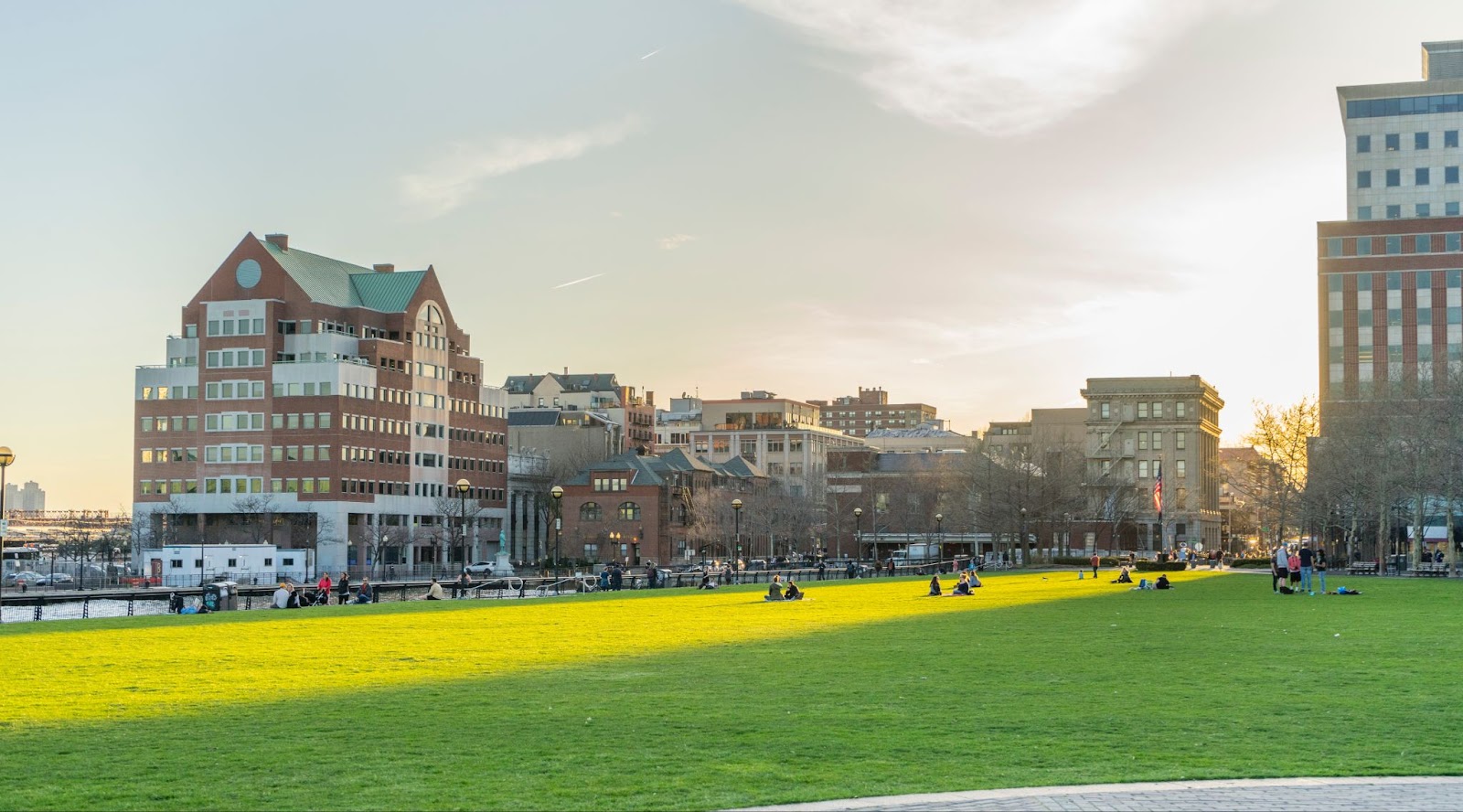
THE HEARTBEAT OF THE CITY: DINING, PARKS & ARTS
One of the perks of urban living is easy access to food, parks, and entertainment—and both Hoboken and Jersey City deliver, each with a distinct feel.
DINING & NIGHTLIFE:
Hoboken is a well-known destination for food and drinks. Along Washington Street, you’ll find Italian staples, trendy brunch spots, sushi bars, and vibrant nightlife—from sports pubs to live music venues. Though compact, its offerings are high quality and always evolving, making it ideal for those who want convenience, energy, and strong walkability.
Jersey City’s culinary scene has grown rapidly, earning comparisons to NYC for its global variety and creativity. From gourmet pizza at Razza to the flavors of Little India, foodies will find no shortage of new favorites. JC also hosts “Restaurant Week” and frequent food festivals, all supported by a booming jobs sector and an ever-expanding real estate market driven by urban professionals and creatives.
PARKS & RECREATION:
Hoboken shines with its continuous waterfront walkway, scenic piers, and pocket parks. It’s easy to find green space, playgrounds, and fitness options throughout the city—making it popular with young families and residents who prioritize outdoor access, safety, and quality of life without sacrificing commute times.
Jersey City, being larger, offers more expansive recreation. Liberty State Park provides skyline views and space to bike, picnic, or relax. Neighborhood parks like Hamilton, Lincoln, and Van Vorst add charm and access to sports fields, playgrounds, and community events—an advantage for those considering long-term housing options with nearby amenities.
CULTURAL SCENE:
Hoboken’s arts scene is intimate but active, with events like the Arts & Music Festival, Sinatra Idol, and Movies Under the Stars. The city supports galleries, studio tours, and open-air performances—another reason its cost of living remains attractive to those looking for culture without Manhattan prices.
Jersey City, fueled by its diversity, boasts galleries, theaters, cultural parades, and festivals throughout the year. Areas like the Powerhouse Arts District and Journal Square pulse with creativity. Venues like Nimbus Arts Center and Loew’s Theater anchor a growing cultural identity and reflect the city’s investment in arts, lifestyle, and real estate development.
WHICH CITY SPEAKS TO YOU?
Hoboken packs community, dining, and entertainment into one walkable square mile. Jersey City offers more scale and cultural variety, with something happening in every corner. If you love small-town energy with big-city polish, Hoboken delivers. If you’re after global flavor, arts, and room to explore, Jersey City will keep you inspired—especially if you’re factoring in jobs, housing, or a manageable cost of living.

A DECISION THAT STARTS WITH YOU
Choosing between Hoboken and Jersey City in 2025 comes down to weighing a boutique urban experience versus a metropolitan diverse experience – and knowing what balance of cost, space, and community suits you best.
If you crave a tight-knit, pedestrian-friendly community where everything is at your doorstep, schools are a walk away, and Manhattan feels like an extension of your backyard, then Hoboken’s charm and walkability are hard to beat. It offers a high-quality urban lifestyle with a small-town twist – albeit at a premium cost of living and with limited housing space. Hoboken is often the choice for those who say, “I want city living, but I also want to know my neighbors and feel a sense of community,” especially those who prioritize safety, convenience, and access to strong local amenities.
On the other hand, if you’re drawn to variety, scale, and job opportunities, Jersey City is like a city of neighborhoods waiting to be discovered. It can be more affordable for comparable property, and it provides options – whether it’s the glossy high-rise life or a historic townhouse on a quiet street. Jersey City’s momentum in recent years has been remarkable: new businesses, arts, nightlife, parks, and residential developments are continually transforming the landscape. There’s a sense that JC is still on the rise, which is exciting if you want to grow along with a city. You might have to be more selective about location in Jersey City, but the payoff could be more space or a unique home that you wouldn’t find in Hoboken.
For many, Jersey City offers a “sweet spot” of urban living: close to NYC, rich in its own culture, and with a bit of breathing room. The city’s variety in real estate options and its ongoing development make it appealing for buyers seeking value, space, and long-term potential.
In terms of investment and long-term prospects, both cities are poised to remain desirable. Hoboken’s limited land and perpetual demand will likely keep values strong. Jersey City’s development and increasing stature (it’s now the largest city in NJ by population) point to continued growth, especially as infrastructure and amenities keep improving. It’s not an exaggeration to say these two locales have become premier destinations for those leaving Manhattan or Brooklyn – offering relative value, commute efficiency, and convenience – and that trend will persist as long as NYC is the economic powerhouse next door.
Still deciding between Hoboken and Jersey City? With the right guidance, finding your ideal place—whether it’s community-driven charm or city-scale energy—becomes a lot easier. Both offer strong real estate potential, vibrant lifestyles, and unmatched access to NYC.
For personalized assistance and expert insights, contact Alexander Proskurov at (732) 580-2120 or email alexpr@newjerseyresidence.com.
This is not intended as a solicitation if your property is already listed with another brokerage.
