
New Jersey homeowners know the drill: property tax bills often top $10,000 a year. In fact, the average NJ homeowner paid about $10,095 in property taxes in 2024 – the highest in the nation. At first glance, those steep taxes can make you pause. But New Jersey’s higher bills buy something valuable: excellent public services. In this guide we explain why NJ’s taxes are so high and what you get in return.
WHY ARE NEW JERSEY’S PROPERTY TAXES SO HIGH?
Several factors make NJ property taxes among the nation’s highest. First, property values are high. More expensive homes generate more tax revenue. In fact, New Jersey’s higher home prices help create higher tax bills. For example, the state’s average home value reached about $382,988 in 2024. Second, local governments rely heavily on property taxes. Unlike many states, New Jersey municipalities have few alternative revenue sources (like local sales tax or broad-based fees), so they depend on the property tax to pay for schools, police, roads and more. NJ law even limits local revenue options, meaning towns must lean on property taxes to fund essential services.
Another big driver is education funding. New Jersey spends very generously on public schools – about 60% of property-tax revenue goes to schools – more than most states. (By comparison, the national average is far less.) NJ’s per-pupil spending is among the country’s highest, and this raises tax levies. For instance, in 2017 NJ spent an average $18,920 per student, fourth-highest nationwide. Local school budgets in affluent districts (think Millburn, Princeton, etc.) are huge because homeowners demand top-quality education.
A third factor is New Jersey’s fragmented local government structure. With over 550 municipalities (many quite small), each has its own school and municipal budget. This duplication of services means costs per home stay high. In short, NJ combines expensive homes, dedicated local funding for schools, and lots of local governments — and that adds up to bigger bills for homeowners. It’s worth noting, too, that state pension costs and other mandated expenses have put upward pressure on property taxes over time.
WHAT DO NEW JERSEY PROPERTY TAXES PAY FOR?
New Jersey property taxes fund many local services that shape your everyday life. The biggest slice (about 60%) goes to public K-12 schools. As one NJ League of Municipalities FAQ explains, local taxes must cover education, transportation, police, and more – and the state constitution still leaves most of K-12 funding to towns. In practical terms, this means towns can hire more teachers, maintain top facilities, and keep small class sizes. The result: NJ boasts some of the nation’s best public schools. For example, Niche’s 2025 rankings list Princeton Public Schools as the #2 district in NJ and Millburn Township (Short Hills) as #3, with Ridgewood (#4) and Haddonfield (#10) also in the top 10. These are the communities where paying higher taxes translates directly into A+ schools.
Aside from education, property taxes in NJ pay for:
- Local and county governments (roughly 20%). This covers public safety (police, fire, emergency services), road maintenance, snow removal, and local infrastructure. As the NJ Dept. of Treasury notes, property tax bills are levied by municipal, county, and school governments to pay for roads, schools and other services. Cities and towns in NJ have limited revenue tools, so police and road budgets come straight from your tax dollars.
- Libraries, parks, and parks & recreation. Funds often go to community services like local libraries, parks, libraries, municipal buildings and sanitation. Again, these are paid by local budgets fueled by property taxes. If your town has well-maintained parks or recreation programs, chances are your taxes help support them.
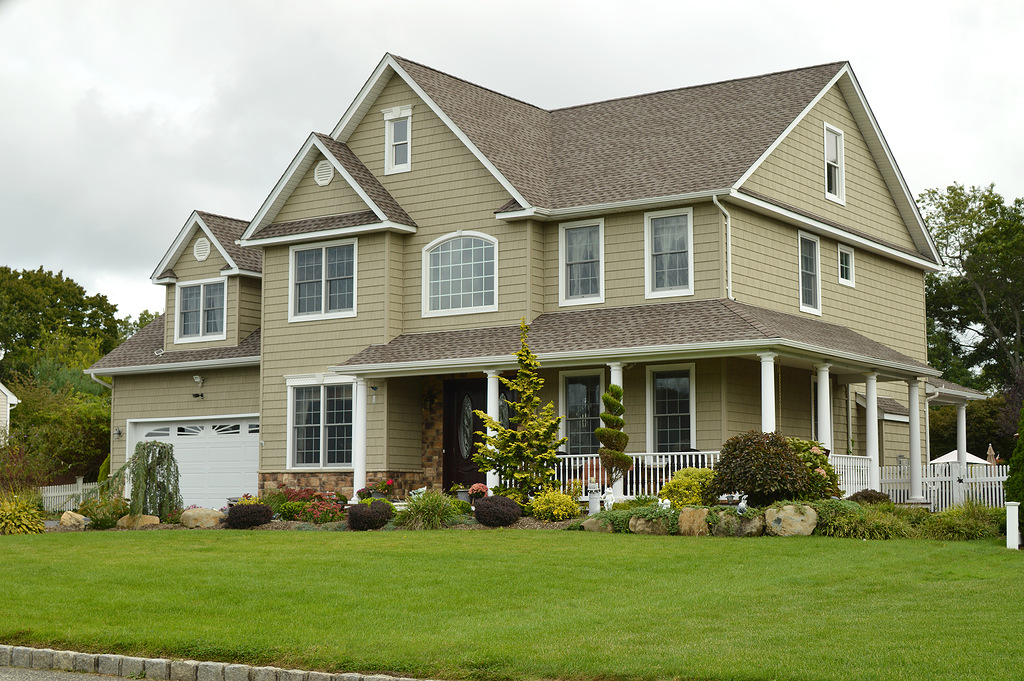
A typical suburban home in Summit, New Jersey. Homeowners here pay high property taxes, which fund well-staffed schools, safety departments, and other neighborhood services. Local taxes in NJ make sure “when your property tax bill goes up and municipal services don’t meet your needs,” voters can ask why. In practice, having higher taxes often means more services. As one public explanation notes, without property taxes local governments cannot pay for police protection, snow removal, or schools. In other words, these taxes pay for the high level of public safety and upkeep residents expect. It’s a tradeoff: we pay more in tax, and in return we get more services.
SCHOOL QUALITY AND COMMUNITY SERVICES
Because so much of the tax money goes to education, NJ schools tend to be very competitive. Districts in high-tax towns often win state awards, attract involved parents, and produce strong outcomes. For homebuyers, that’s a major selling point. A 2024 study even noted that Northeastern states with high tax rates (like NJ) often have higher home values and “more robust local services” than in lower-tax areas. In practice, you will often see well-kept school buildings, modern equipment, and a wide range of programs – all financed by property taxes.
It’s not just schools, though. The same tax dollars pay for fire and police. If you live in a well-funded community, your town may afford more first responders or better training. They fund roads and bridges too: road repair and snow plowing come from your municipal budget. When a road is paved or a neighborhood has reliable emergency response, property taxes are likely paid for it. Even garbage pickup and leaf collection are usually covered in those local budgets.
Property taxes and home values go hand in hand. In high-tax, high-service areas, home prices are often higher too. National data show the Northeast (with its higher taxes) also has the highest average tax bills. In fact, NJ’s average tax bill is the nation’s highest at about $10,134 for a single-family home (2024 data). That’s nearly ten times the average in West Virginia, for comparison. But the flip side is that NJ home prices reflect those amenities. For example, the state’s average house value rose to around $382K in 2024, and in elite towns it’s much higher. In short, buyers end up paying more up front (taxes), but the community features often justify the extra cost.

HOW IT AFFECTS HOME VALUES AND YOUR DECISION
So how do these taxes factor into a homebuying decision? The short answer: higher taxes often come with higher value. Buyers who want top schools or safety pay a premium. In many NJ towns, people willingly pay more in exchange for those public benefits.
Consider this: a quality school district can boost demand for homes, which drives up prices. Families sometimes say “even though the taxes are high, we’d rather pay them for these schools.” And it works the other way: if you choose a lower-tax area, you might sacrifice some services. For example, a small rural township might have very low taxes but also have schools that spend less per student or fewer local amenities.
We see these trade-offs reflected in the market data:
| Town, NJ | Effective Property Tax Rate (2024) | Median Home Value | Median Household Income | School Rank (Niche 2025) |
| Princeton (Mercer) | ~1.6% | $1,040,400censusreporter.org | $184,113censusreporter.org | #2 |
| Millburn Twp (Essex) | ~1.9% (≈$1.32M homes) | $1,318,800censusreporter.org | $250,001censusreporter.org | #3 |
| Ridgewood (Bergen) | ~2.1% | $978,934 | $211,224 | #4 |
| Haddonfield (Camden) | ~2.3% | $763,106 | $264,817 | #10 |
| Moorestown Twp (Burl) | ~2.4% | $533,400 | $134,167 | #16 |
This table illustrates the pattern. In places like Princeton and Millburn, homes are worth well over $1 million and effective tax rates (tax bill divided by value) are around 2%. These towns are famous for top-tier schools (#2 and #3 in NJ) and also have very high incomes (six-figure medians). Their high taxes directly fund those perks. Meanwhile, Haddonfield and Ridgewood have moderately lower home prices (in the $750K–$980K range) but still pay roughly 2–2.3% in taxes – reflecting strong schools and services in those boroughs. Even Moorestown (in South Jersey) shows about 2.4% – it has lower home values (~$533K median) but still high taxes to support its schools (Niche ranks Moorestown #16 in NJ).
In practical terms, these data mean: High-tax towns tend to have high home values and incomes. Buyers should ask: am I getting enough in services/schools for this price? If schools or community features are a priority, that might justify the tax rate. For example, Princeton’s slightly lower tax rate (~1.6%) comes with a small-town feel and Princeton University area benefits, while Millburn’s higher rate buys you top-rated schools.
BALANCING COST AND BENEFIT AS A BUYER
When weighing a move to New Jersey, consider what matters most for your family. Here are some key takeaways:
- School Quality vs. Tax Bill: If excellent public schools are a top priority, New Jersey’s high property taxes often go right into school funding Towns with A+ districts (Princeton, West Windsor, Tenafly, etc.) tend to have above-average taxes. Many buyers view this as an investment: paying 2% in taxes might seem steep, but you’ll pay that into appreciating home values and better education.
- Local Services and Safety: Well-funded municipal services can make life more convenient. If you value things like quick emergency response, clean streets, and updated infrastructure, realize these are all funded by your tax dollars. A heavier tax bill means your town can more easily afford police and road crews. In return, homebuyers often feel these neighborhoods are safer and better maintained, supporting property values.
- Home Value Growth: Generally, communities that spend more on schools and amenities also see strong home-value growth. For long-term buyers, higher taxes that sustain good schools and services can mean steadier property appreciation. Nationally, the Northeast’s average tax bills (highest region) align with the most valuable real estate.
- Tax Relief Programs: Remember that New Jersey does offer relief programs (like the Homestead Benefit or ANCHOR credit) to offset some of the burden, especially for longtime residents and seniors. If you qualify, these state programs can take a bit off your annual bill. (Discuss them with your realtor or township.)
- Shop Around: If your main goal is lower taxes, some NJ areas have more moderate levies. For example, many South Jersey suburbs or rural counties have average taxes below the state mean. But keep in mind the trade-off: often those areas have less funding for schools and services, or longer commutes.
Ultimately, think of property taxes like an investment in where you live. In New Jersey, you pay a premium, and you get a premium: top-ranked schools, strong local budgets, and communities built for families. Prospective buyers should weigh those benefits against the cost. As one report notes, our high tax burden “helps to support more robust local services” than in many states. If those services (excellent education, safety, infrastructure) align with what you want in a home, then a higher tax bill might be worth it. Use the table above and local data to compare towns, and remember to factor in state relief programs.
New Jersey’s property tax puzzle isn’t just a downside; it’s a payoff. For many homebuyers, understanding exactly what those extra dollars buy is key to making a smart move.
For personalized assistance and expert insights, contact Alexander Proskurov at (732) 580-2120 or email alexpr@newjerseyresidence.com.
This is not intended as a solicitation if your property is already listed with another brokerage.
